Supercar Storage
Equerry 55 provides supercar storage at a private indoor facility in Essex, serving owners across London and the UK. We store your car to the guidance its own manufacturer publishes, not to one house routine. From £250 plus VAT per month.
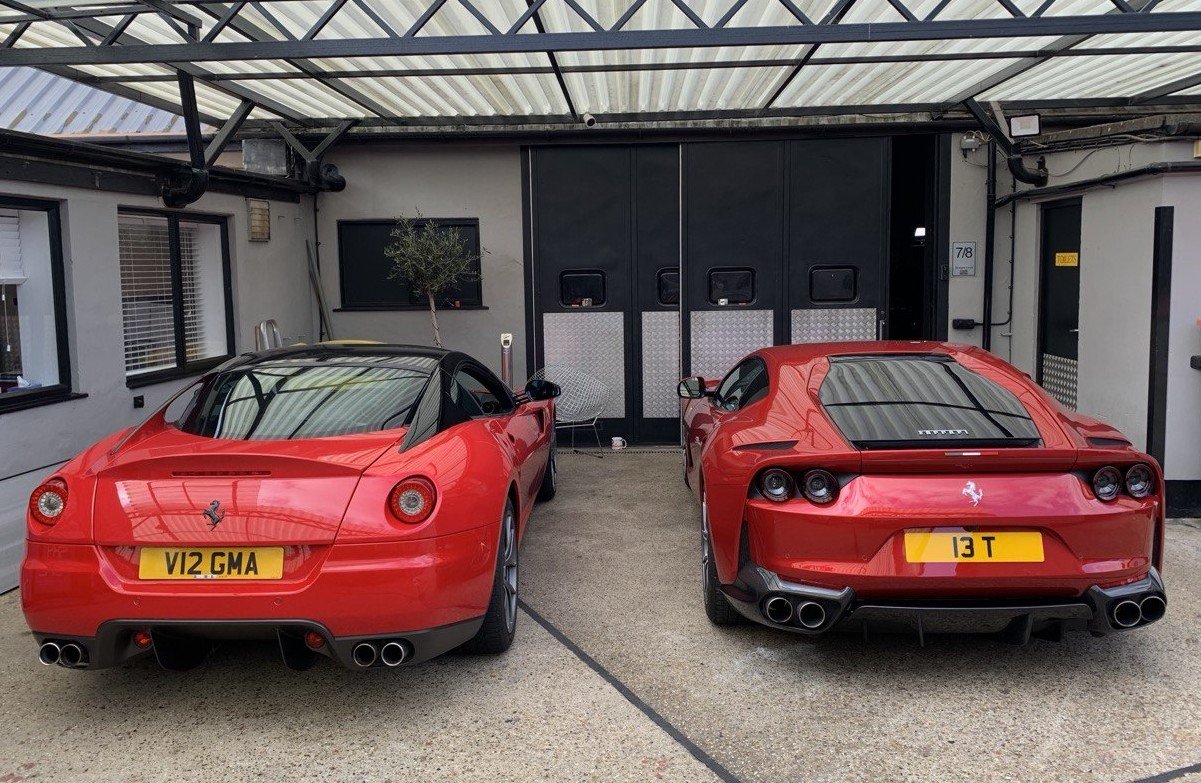
There is no single correct way to store a supercar
Ask three storage companies how they look after a car and you will get three versions of the same paragraph. Secure building, battery conditioner, cover, we start it now and again.
Now go and read what the manufacturers actually publish. They do not agree with each other, and the instructions are far more specific than any storage company's routine.
One marque will tell you to change the oil before the car goes in, because used oil carries contaminants that can sit in the engine for months. Another puts the emphasis on the battery and sells you the conditioner to do it with. One will tell you exactly how far to move the car and how often. One will tell you what position to leave the rear wing in.
A storage company running one routine across every car in the building is, by definition, not following most of those instructions.
So Equerry 55 starts somewhere else. Tell us what the car is, and the storage regime is set from that car’s own manufacturer guidance before it is booked in.
What a real manufacturer procedure looks like
This is Ford’s published storage procedure for the GT, summarised. It is here because it shows how detailed this gets, and because almost none of it appears on a generic car storage page.
| Area | What Ford specifies for the GT |
|---|---|
| Threshold | The procedure applies from 30 days of storage onwards |
| Lifting | Do not park in facilities using parking platforms or elevators that lift the car. The warranty may not cover damage caused by that equipment |
| Building | Inside a garage or building, dry and ventilated, out of sunlight where possible, under a soft breathable cover |
| Engine | Oil and filter changed before storage. Started every 15 days for at least 15 minutes at fast idle until it reaches normal operating temperature, shifting through the gears while it runs |
| Fuel | Tank filled with good fuel plus a commercially available stabiliser, circulated by running the engine |
| Battery | The maintainer supplied with the car connected whenever it is stored beyond two weeks |
| Brakes | Brakes and parking brake must release fully |
| Tyres | All four at the recommended cold pressure to limit flat spots, reset when the car comes out |
| Movement | Moved at least 25 ft every 15 days |
| Bodywork | Washed down including the wheel housings, hinges and latches oiled, interior trim covered against fading |
| Aerodynamics | Beyond 72 hours without the engine running, the rear wing is left deployed |
| Coming out | Checks under the engine cover and in the exhaust for animal nests, pressures reset, brake operation tested by rolling the car back and forth |
Summarised from Ford’s published Ford GT owner’s manual, Vehicle Care, Vehicle Storage. Shown as an example of how specific manufacturer guidance can be. Your car’s guidance governs your car.
Three things stand out.
The cold pressure. Storage advice usually says to over-inflate. Ford says the recommended cold figure. Get that wrong on somebody else’s car and you have invented your own procedure.
The lift. Ford tells GT owners not to use facilities with parking platforms. Very few storage companies ask whether your car has a restriction like that before they allocate a space.
The wing. One instruction, one car, nowhere else. No house routine ever produces it.
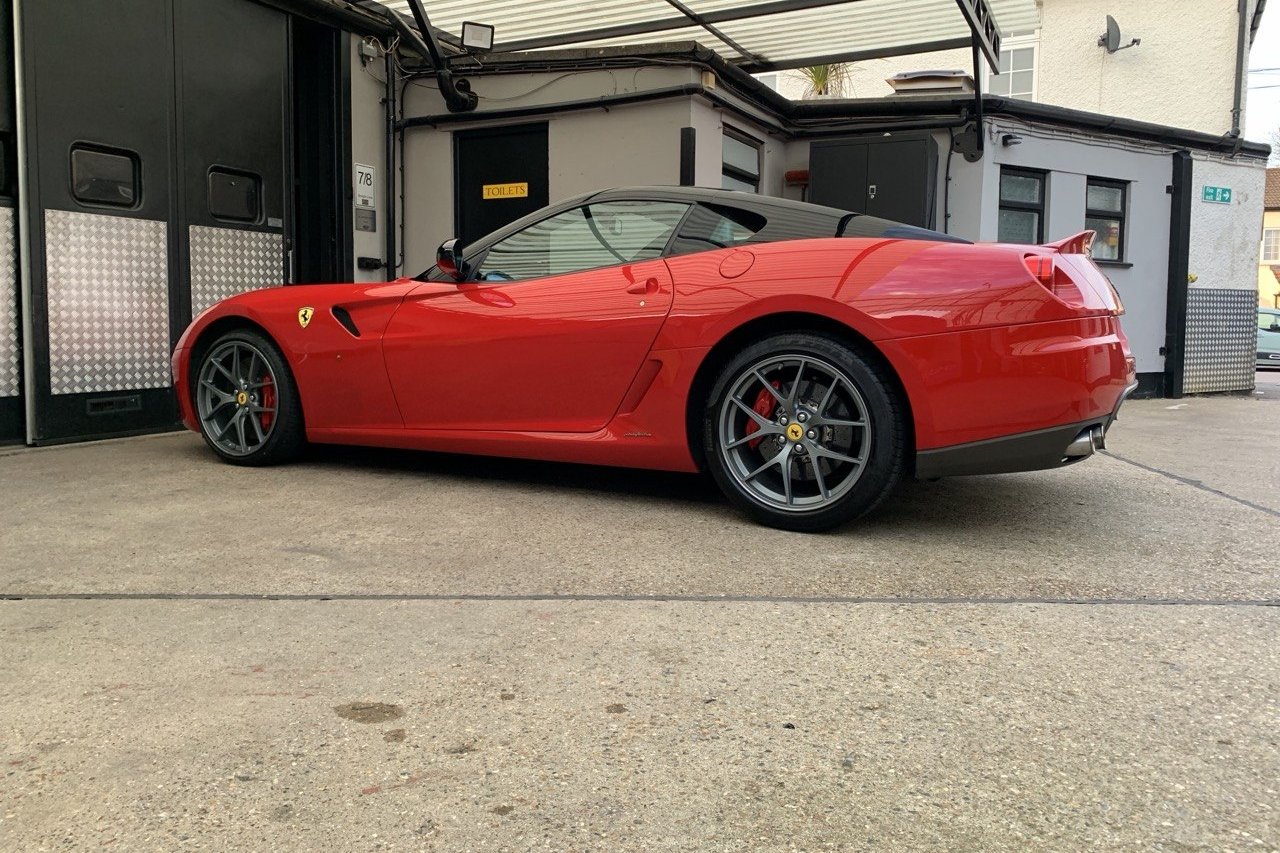
“In the beginning I looked around and could not find quite the car I dreamed of, so I decided to build it myself.”
Same reason this exists. Nowhere kept cars the way we wanted our own kept, so we built it.
What we do with your car
Check in is where the storage regime is decided. Everything after it follows the plan set that day.
Identify the car
Model, variant, year, mileage, road-legal status, and how long it is expected to stay.
Check its guidance
Manufacturer storage instructions where they exist: conditioner, pressures, parking brake, fuel, and any restriction on lifting equipment.
Record it in
Condition photographs, mileage, tyre pressures and fluid levels, before the car goes into storage.
Storage position agreed
Storage position determined according to the vehicle’s requirements and any relevant manufacturer restrictions. Pressures set, conditioner connected, breathable cover on, TyreDox support on The Keep.
Hand it back properly
Pressures reset for the road, conditioner removed, fluids and condition checked before you collect it.
What standing still does, and what we do about it
Battery
Parts of a modern car keep drawing current with the ignition off, and several manufacturers sell their own conditioning equipment for precisely this situation. Conditioning included on every car at both plan levels, matched to the car, status checked weekly on The Keep.
Tyres
A standing car loads the same patch of each tyre continuously. The right storage pressure is the one that car’s manufacturer specifies, which is not always higher than normal. Set to the specified figure at check in, TyreDox support on The Keep, monthly checks, reset for the road before collection.
Brakes
Pads left clamped against a disc for months can bond to it, and a light film of surface corrosion after damp conditions is not unusual. Parking brake handled per that car’s own procedure, and brake binding checked during the sixty day engine run on The Keep.
Fluids
Brake fluid absorbs moisture over time, and coolant, oil and fuel age whether the car moves or not. Some manufacturers specify an oil change before the car goes into storage at all. Levels recorded at check in, monthly visual fluid and leak checks on The Keep, drip tray under the car and checked weekly.
Fuel
Ethanol blended petrol can absorb water, and phase separation can occur if enough water enters the fuel. The fuel strategy is agreed before arrival according to the car, the storage period and its manufacturer guidance, with a stabiliser where appropriate.
Lifting restrictions
Some manufacturers instruct owners not to use facilities with parking platforms or vehicle lifts, and say the warranty may not cover damage from that equipment. Identified at check in and reflected in the vehicle’s storage position, before the car is anywhere near a lift.
Paint and film
Soft paint, paint protection film and ceramic coatings mark if something abrasive sits against them. A breathable indoor cover on every car, over a clean surface. Never a tarpaulin or a sheet.
Interior
Leather, Alcantara, suede and wood all behave differently, but all do better in a clean, stable environment than in prolonged damp, large temperature swings and contamination. Humidity targeted at approximately 55 percent RH, winter temperature around ten to twelve degrees Celsius, indoors and out of daylight.
Records
A car that comes out of storage with no record of what happened to it is a car worth arguing about. Condition photos, mileage, pressures and fluids recorded at check in, and the vehicle file updated after scheduled care checks on The Keep.
Running, moving and driving
There is a lot of confident advice about this and much of it is wrong in both directions.
Some people will tell you that idling a stored car is always harmful. Ford’s own procedure for the GT asks the owner to start it every fifteen days and run it at fast idle until it reaches normal operating temperature, shifting through the gears while it runs. Some people will tell you a start on the driveway is enough. Ford also asks for the car to be physically moved at least twenty five feet every fifteen days, and other manufacturers put the emphasis on driving the car properly instead.
The honest position is that it depends on the car, and the car’s manufacturer has already published an answer.
What is included. The Keep carries an included baseline: the engine run to full operating temperature every sixty days, with brake binding checked during that scheduled exercise. Running to temperature is the point, because a brief idle does not achieve the same thing. Sixty days is Equerry’s own service interval, not a claim that every manufacturer prescribes sixty days. Where your car’s guidance sets a different interval, that is agreed at check in.
What is not automatic. Road testing is available by prior agreement through Concierge Management and is quoted separately. Nobody drives your car unless you have asked for it. If your car’s guidance calls for a specific pattern of running or movement, tell us at check in and we will agree exactly what that looks like.
What we will not do is invent a routine. There is no Equerry rev limit, no monthly blast, no universal schedule applied to every car in the building. We exercise the car properly, not theatrically.
Dry, indoors and stable
Manufacturer storage guidance keeps arriving at the same building: inside, dry, ventilated, out of sunlight, under a breathable cover. Everything else is easier when that part is right.
Equerry 55 targets approximately 55 percent relative humidity and holds winter temperature around ten to twelve degrees Celsius, in a private indoor building. Those are our figures rather than any manufacturer’s. The full case for them, including what happens above and below, is set out on the climate controlled car storage page.
There is no outdoor option, no yard and no container. Equerry 55 also provides classic car storage, long term car storage and winter car storage from the same building, and full rates are on the car storage prices page.
What every car gets from the day it arrives
Both plans share the same controlled indoor environment and the same core storage standards. The Keep adds the scheduled care and the additional protection shown below.
- Storage regime set from your car’s own manufacturer guidance at check in
- Manufacturer lifting restrictions identified before the storage position is agreed
- Battery conditioning, matched to the car
- Humidity targeted at approximately 55 percent relative humidity
- Winter temperature held around ten to twelve degrees Celsius
- Secure indoor storage bay
- Breathable indoor car cover
- Condition photos recorded at check in
- Mileage recorded at check in
- Tyre pressures recorded and set at check in
- Fluid levels checked at check in
- Keys kept away from the car
- Private access by appointment
“The best Ferrari ever built is the next one.”
Fifty five percent relative humidity. Ten to twelve degrees through winter. Checked on a schedule and written down, so the next car is kept better than the last.
Supercar Storage plans and prices
Two storage plans. One concierge network. A three month minimum charge applies. Prices are monthly and shown plus VAT. Concierge requests, transport, servicing, MOT work, detailing, repairs, road testing and specialist supplier costs are quoted separately.
Core indoor storage with the checks and protection needed for a car that is safe, dry and ready for planned access.
- Controlled humidity targeted at fifty five percent relative humidity
- Winter temperature protection around ten to twelve degrees Celsius
- Secure indoor storage bay
- Battery conditioning
- Breathable indoor cover
- Condition photos recorded at check in
- Mileage recorded at check in
- Tyre pressures checked at check in
- Fluid levels visually checked at check in
- Vehicle keys stored separately
- Access by appointment
- Three month minimum term and minimum charge
Active storage care for cars kept for longer periods or owners who want more regular checks while the vehicle is inside.
- Everything in The Stable
- TyreDox support to help reduce flat spotting risk
- Drip tray placed under the vehicle
- Weekly battery conditioner status check
- Weekly drip tray check
- Monthly tyre pressure check
- Monthly visual fluid and leak check
- Engine run to operating temperature every sixty days
- Brake binding checked during scheduled mechanical exercise
- Condition update provided on request
- Vehicle file updated after scheduled care checks
- Three month minimum term and minimum charge
Everything that happens to the car beyond storage, run through one named contact.
- MOT testing
- Specialist servicing
- Detailing
- Paint protection
- Collection and delivery
- Road testing by prior agreement
- Event preparation
- Track day logistics
- Professional photography coordination
- Sale preparation support
- Cherished plate and paperwork support
- Bespoke requests handled through one contact
Pricing note
Prices shown apply to standard vehicle storage. High value or specialist vehicles may require prior approval and a bespoke quotation depending on declared value, insurance requirements and any special handling requirements.

The cars we store
Supercar storage here covers the mid engined cars, the fast four seaters, the limited run cars, the track prepared cars and the modern classics. Whatever the car, the regime is set from its own manufacturer guidance at check in.
Suitable for Ferrari, Lamborghini, McLaren, Porsche, Aston Martin and other modern performance, limited production and collector cars. Equerry 55 does not store electric vehicles.
Getting the car back ready to drive
Cars go out for track days, race meetings, shows, tours and continental trips and come back in afterwards. Access is booked in advance, which is what keeps the site quiet and private rather than a limit on when you can have your own car.
Before you collect it, storage pressures are reset to road figures, the conditioner comes off, and fluids and condition are checked. The car should be ready to drive, not ready to recover.
Collection and delivery can be arranged across Essex, London and the UK, and covered transport can be booked for cars that need it. Every movement is agreed in advance and quoted separately.
- Access by private appointment
- Collection and delivery
- Covered vehicle transport
- Track day and event logistics
- Preparation before collection
- MOT booking and specialist servicing
- Detailing and paint protection
- Photography coordination
- Sale preparation support
“Small things make perfection, but perfection is no small thing.”
Batteries sulphate. Tyres flat-spot. Fluids draw water and brakes bind. None of it is dramatic and all of it is expensive.
Private storage, clear accountability
Equerry 55 runs one facility. It is a private indoor site in Essex with access from the M11, M25 and A406, serving owners across London and the UK. One building means one environmental standard, one operating process and one point of responsibility for every car on site.
The service is managed through Equerry 55 with clear responsibility for storage, access, transport and any additional work. Anything beyond storage is agreed with you before it is booked.
Equerry 55 facility cover is available up to fifty thousand pounds per vehicle, subject to policy terms, exclusions and the storage agreement. Owners keep their own insurance on the car throughout, and higher declared values are agreed before the car arrives.
Visits are by private appointment and the full address is shared with approved clients. Come and see where your car would live.
- One building, one environment
- Private indoor site, gated estate
- Cameras and alarm
- Controlled entry
- Keys kept away from the cars
- Access by appointment
Car storage across Essex, London and the UK
Equerry 55 runs one facility. Every area below is served from that same private Essex site, with collection and delivery arranged where it is needed.
Supercar Storage by location
Supercar Storage FAQs
Is there one correct way to store a supercar?
No, and that is the whole point. Manufacturer storage procedures differ from marque to marque and sometimes from model to model. Ford publishes a detailed procedure for the GT covering oil, fuel, battery, brakes, tyres, movement and even the position of the rear wing. Other manufacturers place the emphasis elsewhere. Equerry 55 works to the guidance for your car rather than applying one house routine to everything in the building.
How much does supercar storage cost?
The Stable is £250 plus VAT per month and The Keep is £350 plus VAT per month. Both include the controlled environment, battery conditioning and a breathable indoor cover. Both plans carry a minimum charge equivalent to three months. A shorter stay can be arranged, but the minimum charge still applies.
What do you need to know about my car before it arrives?
The model, variant and year, the mileage, whether it is taxed or off the road, any manufacturer storage instruction you already know about, and how long you expect it to stay. That is enough to agree the storage regime before the car is booked in rather than working it out on the day.
Do you actually read the manufacturer's storage guidance?
Yes, and it is worth reading. Ford's procedure for the GT specifies an oil and filter change before storage because used oil carries contaminants, periodic engine operation, tyre pressures set to the recommended cold figure rather than an elevated one, and a check for animal nests under the engine cover when the car comes out. None of that is guesswork and none of it is in a generic storage checklist.
Why does the battery matter so much?
Because parts of a modern car keep drawing current with the ignition off, and because several manufacturers sell their own conditioning equipment for exactly this situation. Ford instructs GT owners to connect the maintainer supplied with the car whenever it is stored for more than two weeks. Battery conditioning is included on every car here at both plan levels, and on The Keep the conditioner status is checked weekly.
What tyre pressure do you store the car at?
Whatever that car's manufacturer specifies. It is worth saying plainly that this is not always higher than normal. Ford's instruction for the GT is to inflate all four tyres to the recommended cold pressure to minimise flat spots, and to reset the pressures when the car comes out of storage. The Keep also adds TyreDox support and a monthly pressure check.
Should the handbrake be left on or off?
It depends on the car. Ford's instruction for the GT is to make sure the brakes and parking brake release fully, which is not the same as a blanket rule that every car is parked with the handbrake off. Electronic parking brakes in particular have their own procedure. It is agreed at check in for your car.
Do you run or drive the car while it is stored?
The Keep includes an engine run to full operating temperature every sixty days, with brake binding checked during that scheduled exercise. Road testing is available by prior agreement through Concierge Management and is quoted separately. Any driving of your car is something you authorise, not something that happens by default.
Is idling bad for the car?
Not necessarily, and be careful of anyone who tells you it always is. Ford's own GT procedure calls for the engine to be started every fifteen days and run at fast idle until it reaches normal operating temperature, with the gears shifted through while it runs. Other manufacturers put the emphasis on driving instead. The right answer comes from the car's own guidance.
What should I do about fuel?
E10 became the standard 95 octane petrol grade in Great Britain in September 2021 and contains up to 10 percent bioethanol. E5 super unleaded, at no more than 5 percent, remains widely available. Ethanol blended petrol can absorb water, and phase separation can occur if enough water enters the fuel. Ford's GT procedure is a full tank of high quality fuel plus a commercially available stabiliser, run through the system for at least a minute. What suits your car is agreed before it arrives.
Can a fuel stabiliser be added?
Yes, where the manufacturer calls for it or the care plan makes it appropriate. Ford specifies exactly that for the GT. The product and whether it suits your car is agreed with you rather than applied as standard to everything in the building.
Can my car be stacked on a lift?
Not always, and it is a question worth asking any storage company. Ford instructs GT owners not to park in facilities that use parking platforms or elevators that lift the vehicle, and states that the warranty may not cover damage caused by that type of equipment. Manufacturer restrictions like that are identified before the vehicle’s storage position is agreed rather than discovered afterwards.
Can I use the car during the storage term?
Yes. Access is booked in advance by private appointment. Cars go out for track days, events, tours and continental trips and come back in afterwards, and collection and delivery can be arranged.
Is the car insured while it is stored?
Equerry 55 facility cover is available up to fifty thousand pounds per vehicle, subject to policy terms, exclusions and the storage agreement. The owner keeps their own insurance on the car for the whole storage term. Higher declared values are agreed before the car arrives.
Do you store electric supercars?
No. Equerry 55 does not store electric vehicles.
Where is the facility?
Equerry 55 is at a private site in Essex with access from the M11, M25 and A406, serving owners across London and the UK. All visits are by appointment and the full address is shared with approved clients.
Come and see where your car would live.
Tell us the car, where it is now, any clearance we should know about and how long you expect to need storage.
Equerry 55 will confirm availability and explain the storage and transport options.