Climate Controlled Car Storage
Equerry 55 provides climate controlled car storage at a private indoor facility in Essex, serving owners across London and the UK. Humidity is targeted at approximately 55 percent relative humidity, with winter temperature held around ten to twelve degrees Celsius and plans from £250 plus VAT per month.
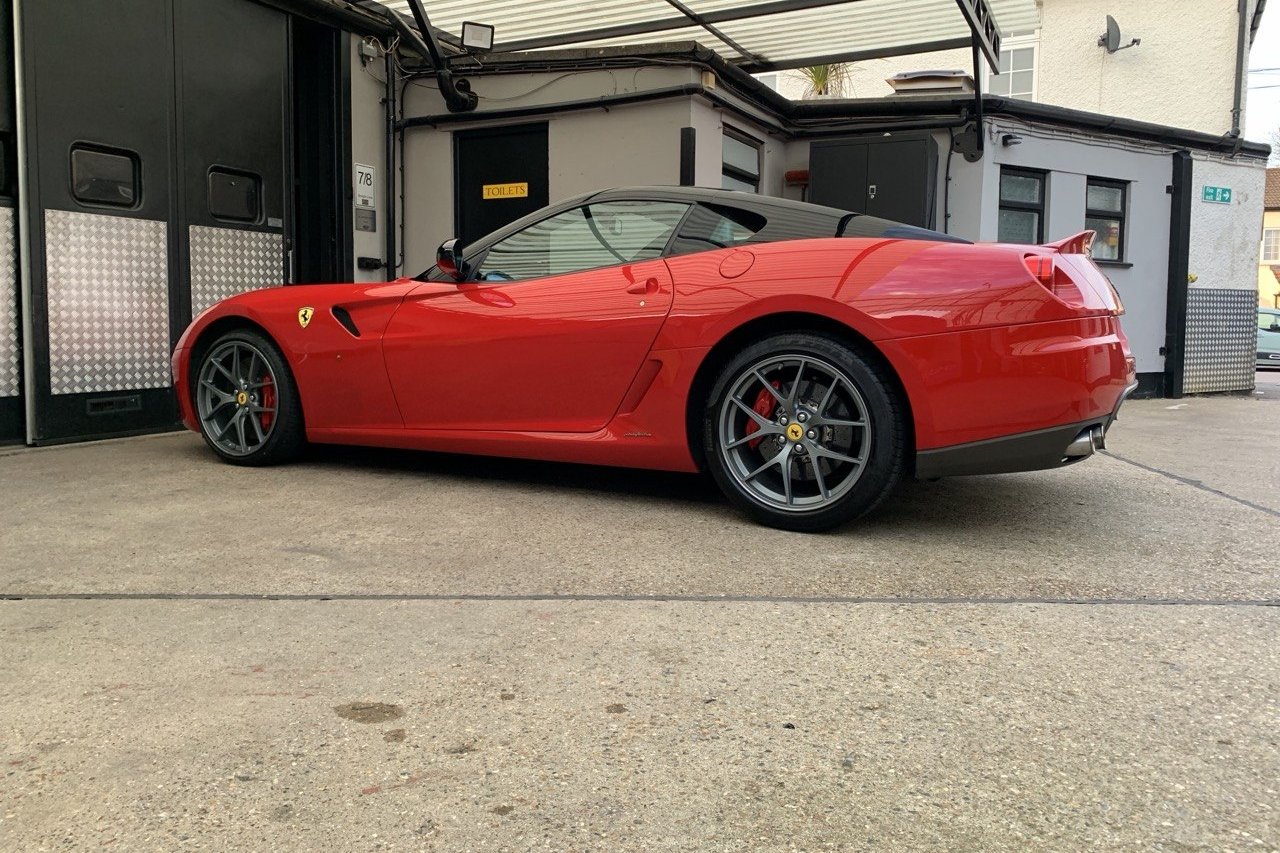
What climate controlled car storage actually means
Most of the damage that happens to a stored car is not dramatic. Nothing falls on it and nobody breaks in. It corrodes quietly, it dries out slowly, and the owner notices eighteen months later when a seal has hardened, a brake disc has pitted or a piece of brightwork has gone dull.
The worst version of it is the car that went in perfect. Fresh out of paint, everything right, put away for what was meant to be a safe eighteen months. It comes back out with rust bubbles lifting through the paint around the door trims and the wheel arches. Nothing touched the car. The air did that.
A standing car faces several things at once: temperature, light, pests, a discharging battery, tyres deforming under their own load. A large part of the preservation risk while a car stands unused comes from moisture in the air, and it can be managed by the building around the car. That is the argument for climate controlled car storage.
Climate controlled car storage means the air around the car is managed rather than left to follow the weather outside. Two things are held steady: how much moisture the air is carrying, and how warm the building is. At Equerry 55 the operating target is approximately 55 percent relative humidity, with winter temperature held around ten to twelve degrees Celsius.
A garage, a barn, a container or a lock up will keep rain off a car. None of them do this. They track the outside air, which in Britain means the car sits through every damp autumn morning and every sharp February night that the weather delivers.
The number, and why it is not a magic one
A great deal of the car storage industry quotes 55 percent relative humidity as the optimum figure for preserving a car. Equerry 55 uses the same target and will not tell you it is optimum, because that claim does not survive a look at the source material.
Conservation guidance from the Canadian Conservation Institute puts the moderate range recommended for composite and mixed material collections at roughly 40 to 55 percent relative humidity, and identifies 65 percent as the threshold above which metal corrosion speeds up significantly. Read that carefully and approximately 55 percent is not the middle of the safe band. It sits at the upper end of it.
So why does Equerry 55 sit there, rather than lower?
Because a car is not a lump of steel. It is a composite object. Bare metal, brake discs, unplated fasteners and brightwork would all prefer drier air than 55 percent. Leather, wood and other moisture sensitive interior materials become more vulnerable as conditions get too dry, while the rubbers, plastics, adhesives and electrical materials in the car each age in their own way.
Drive the building much drier to please the metal and the balance tips the other way, with leather and other moisture holding materials becoming more vulnerable to moisture loss and dimensional change. Approximately 55 percent is a deliberate compromise, chosen to keep corrosion risk low while making sure the organic parts of the car are not dried out. That is an engineering judgement, not a discovery. It is the honest version of the same number everybody else advertises.
What each humidity level does to a stored car
Here is a practical way to read the main humidity bands for a stored car. These bands are drawn from published conservation guidance for metals, leather and mixed material collections rather than from marketing copy.
| Relative humidity | What it means for a car standing still |
|---|---|
| Below 30% | Very dry. Leather and other moisture holding materials lose internal moisture, which leads to loss of flexibility and a greater risk of physical damage. Conservation guidance advises extra caution handling objects below this level. Dry is not automatically safe. |
| 30–40% | Favourable for many metals, and drier than the range normally preferred for leather and other organic materials. Whether it suits a complete vehicle depends on what that vehicle is made of and what condition it is in. |
| 40–55% | The moderate range recommended for mixed and composite collections. Corrosion risk stays low for the majority of metals while the interior is not being dried out. The Equerry 55 operating target of approximately 55 percent sits at the top of this band. |
| 55–65% | Above the range normally used for storing mixed collections. Corrosion risk generally increases as humidity rises, and surface contamination, road salts and pollutants can increase it further. Guidance for mixed collections recommends considering further measures once 55 percent is exceeded. |
| Above 65% | The problem zone. There is now enough adsorbed moisture on clean metal surfaces to support corrosion properly, and metal corrosion speeds up significantly. It is also the level above which mould becomes favourable on leather and similar materials, and the higher it goes the faster mould appears. |
Bands drawn from Canadian Conservation Institute preventive conservation guidance for metal objects and for leather, skin and fur. A vehicle is a composite object, so no single band suits every component in it equally.
“In the beginning I looked around and could not find quite the car I dreamed of, so I decided to build it myself.”
Same reason this exists. Nowhere kept cars the way we wanted our own kept, so we built it.
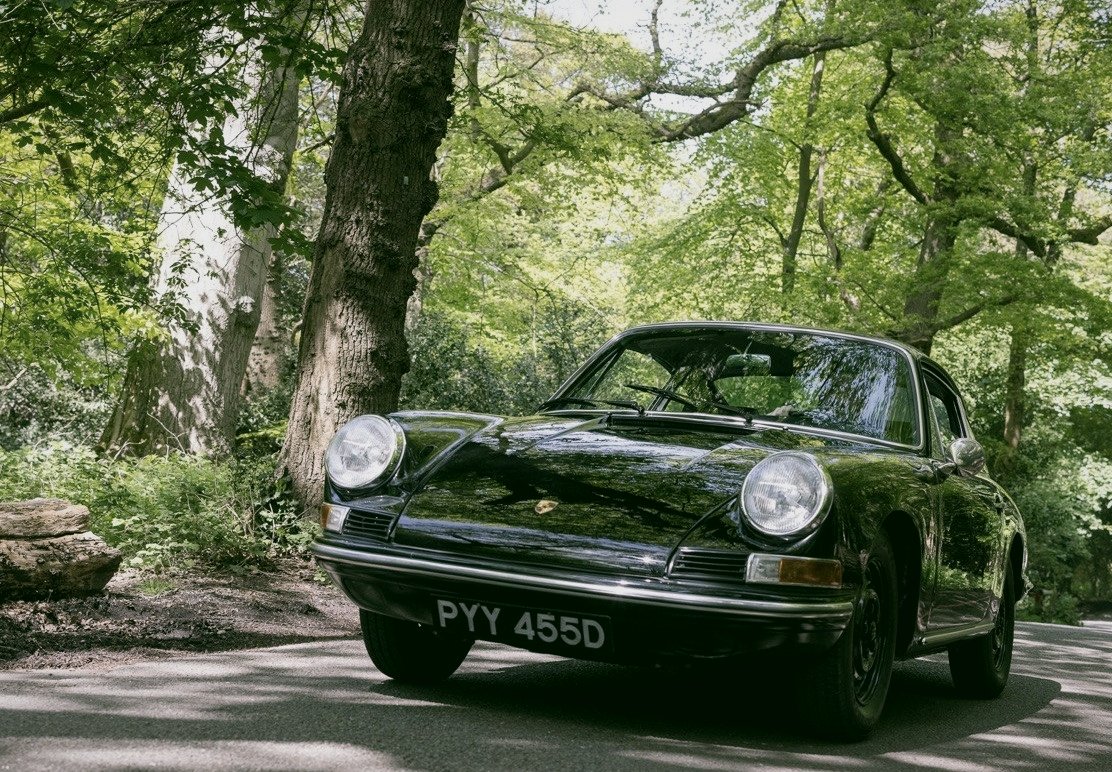
A car is made of many different materials
This is the reason climate controlled car storage exists as a separate idea from simply keeping a car indoors. Every material in the car responds to moisture differently, and they do not all want the same thing.
Steel and iron
Corrosion needs moisture, and above roughly 65 percent relative humidity there is enough of it on a clean metal surface for the process to run properly. It starts where moisture is trapped and slow to leave: seams, folded edges, wheel arch lips and behind door trims. Paint hides the start of it and shows you the end of it.
Brake discs
Bare cast iron, exposed to the air, with no paint or plating protecting the friction faces. The first thing to show surface rust on a car that has sat in a damp building, and the most visible.
Chrome and brightwork
Plating is a barrier, not immunity. Where plating is thin, worn or already chipped, damp air reaches the metal underneath and corrosion begins from the inside out.
Leather
The material that argues against a dry building. Leather is among the fastest organic materials to react physically to a change in humidity, losing or gaining internal moisture as conditions move.
Rubber and seals
Door seals, window seals, boot seals and hoses. High humidity and large swings are both unwanted, and a hardened seal is a slow, quiet, expensive failure to put right.
Wiring and connectors
Multi pin connectors, earth points and terminals sit in exactly the sort of enclosed spaces where damp air lingers. Moisture promotes corrosion at terminals, earth points and connectors, and does it fastest where contamination is already present.
Carpet and headlining
Absorbent materials that hold moisture and release it slowly, which is what produces the smell people describe as a barn car long after the car has left the barn.
Wood and veneer
Dashboards, cappings and door trims move with humidity, and it is movement rather than any single reading that lifts, cracks and delaminates a lacquered veneer.
Adhesives and trim
Every bonded panel, badge, trim clip and glued edge in the car depends on an adhesive that ages faster in damp, warm conditions than in controlled ones.
Why temperature is part of humidity control
People ask why the building is heated at all if humidity is the real issue. The two cannot be separated.
Relative humidity is relative to temperature. Warm air holds more moisture than cold air, so the same quantity of water in a building produces a different relative humidity reading depending on how warm that building is. Conservation guidance puts the relationship at roughly a ten percent change in relative humidity for every three degrees Celsius of temperature change.
That is why an unheated, uncontrolled garage will struggle to maintain stable relative humidity as the temperature changes. Every cold night and every mild afternoon moves the humidity, and the car is pulled along with it.
It also explains condensation, which is the version of this problem people actually see. Condensation forms when a surface is colder than the dew point of the air touching it. A cold engine block, a cold brake disc or a cold panel in a building that warms up quickly in the morning is a surface that will collect water out of the air. Cars in unconditioned buildings can go through that cycle repeatedly, whenever temperature and humidity change quickly.
Holding the building around ten to twelve degrees Celsius through winter is not about making the car comfortable. It is about limiting temperature swings and reducing the conditions that allow condensation to form. There is a second benefit worth knowing: for chemically sensitive materials such as rubber and plastics, conservation guidance puts the rule of thumb at roughly halving the rate of degradation for every five degrees Celsius drop in temperature.
In Climate Controlled Car Storage the swing is its own risk
Two things matter in climate controlled car storage, not one. Where the humidity sits, and how much it moves.
A stable environment at the wrong level is still the wrong level. Air held perfectly steady at 70 percent is a bad place to keep a car, and no amount of consistency rescues it. Stability matters, but stability on its own is not enough. The absolute level still has to sit within a sensible range.
But the reverse is also true. An environment that averages a respectable figure while swinging thirty points either side of it is doing damage that the average conceals. Every swing moves moisture into and out of the leather, the wood, the carpet and the adhesives. Those materials expand and contract as it happens, and the damage is cumulative rather than sudden.
Materials that are held or restrained suffer most, because they cannot move freely as they take on and give up moisture. That is a good description of veneer bonded to a dash, leather stretched over a seat frame and trim glued to a panel.
So the objective is both at once. Stay within a moderate range, and stay there consistently.
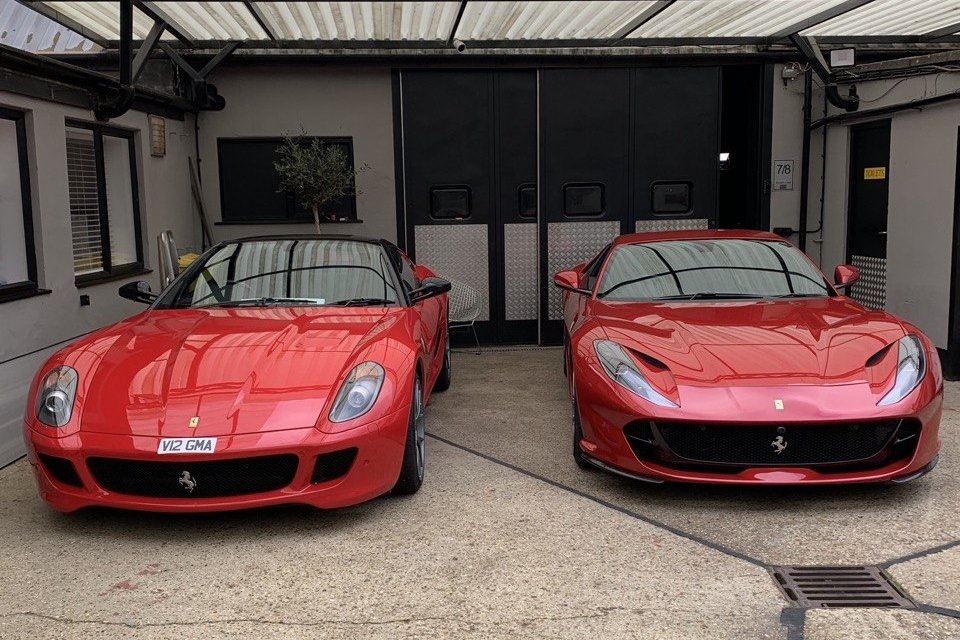
What climate controlled car storage is not
Not the same as heated
Heat alone lowers relative humidity and can push a building past the dry end, which is a different problem rather than no problem.
Not the same as dehumidified
Dehumidification is one tool. Without temperature stability the building still swings, and the swing is its own risk.
Not a substitute for a dry building
A leaking roof, a wet floor slab or standing water beats any climate system in the building. The structure has to be right first.
Not a replacement for battery care
A battery discharges regardless of the air around it. Battery conditioning is a separate discipline and is included with every car.
Not a fix for flat spots
Tyres deform under a stationary load whatever the humidity. TyreDox support and monthly pressure checks address that on The Keep.
Not a reason to skip an engine run
Seals, bearings and fluids benefit from an engine brought to full operating temperature every sixty days. Still air does not do that.
Not a magic number
Approximately 55 percent is a reasoned compromise for a mixed material object. Nobody should be selling it as a proprietary discovery.
Not only for classics
Modern cars carry more adhesives, more electronics and more bare unpainted metal than the classics people assume are the only candidates.
Not a short term service
The damage climate control prevents accumulates over months. A fortnight indoors gains very little. A winter or a year gains a lot.
“The best Ferrari ever built is the next one.”
Fifty five percent relative humidity. Ten to twelve degrees through winter. Checked on a schedule and written down, so the next car is kept better than the last.
What Climate Controlled Car Storage includes
Climate Controlled Car Storage is included with every car at both plan levels. The environment is one part of the standard, not the whole of it.
- Humidity targeted at approximately 55 percent relative humidity
- Winter temperature held around ten to twelve degrees Celsius
- Secure indoor storage bay, never outdoor or container
- Battery conditioning
- Breathable indoor car cover
- Condition photos recorded at check in
- Mileage recorded at check in
- Tyre pressures recorded at check in
- Fluid levels checked at check in
- Keys kept away from the car
- Private access by appointment
Climate Controlled Car Storage plans and prices
Two storage plans. One concierge network. Minimum term is three months. Prices are monthly and shown plus VAT. Concierge requests, transport, servicing, MOT work, detailing, repairs, road testing and specialist supplier costs are quoted separately.
Core indoor storage with the checks and protection needed for a car that is safe, dry and ready for planned access.
- Controlled humidity targeted at fifty five percent relative humidity
- Winter temperature protection around ten to twelve degrees Celsius
- Secure indoor storage bay
- Battery conditioning
- Breathable indoor cover
- Condition photos recorded at check in
- Mileage recorded at check in
- Tyre pressures checked at check in
- Fluid levels visually checked at check in
- Vehicle keys stored separately
- Access by appointment
- Three month minimum term and minimum charge
Active storage care for cars kept for longer periods or owners who want more regular checks while the vehicle is inside.
- Everything in The Stable
- TyreDox support to help reduce flat spotting risk
- Drip tray placed under the vehicle
- Weekly battery conditioner status check
- Weekly drip tray check
- Monthly tyre pressure check
- Monthly visual fluid and leak check
- Engine run to operating temperature every sixty days
- Brake binding checked during scheduled mechanical exercise
- Condition update provided on request
- Vehicle file updated after scheduled care checks
- Three month minimum term and minimum charge
Everything that happens to the car beyond storage, run through one named contact.
- MOT testing
- Specialist servicing
- Detailing
- Paint protection
- Collection and delivery
- Road testing by prior agreement
- Event preparation
- Track day logistics
- Professional photography coordination
- Sale preparation support
- Cherished plate and paperwork support
- Bespoke requests handled through one contact
Pricing note
Prices shown apply to standard vehicle storage. High value or specialist vehicles may require prior approval and a bespoke quotation depending on declared value, insurance requirements and any special handling requirements.
Which cars gain most from Climate Controlled Car Storage
The cars that gain most are the ones carrying the most organic material alongside the most exposed metal. A classic with leather, wood, chrome and rubber seals is the obvious case, and it is the right one.
The less obvious case is the modern supercar. More adhesives, more bonded panels, more electronic connectors, larger bare brake discs and more unpainted metal than the classics people assume are the only candidates. For that, supercar storage and climate control are the same conversation.
Equerry 55 does not store electric vehicles. Every car is stored inside the private Essex facility and the environment is the same for all of them, at both plan levels.
Why this matters more in this country
Britain sets a particular storage problem: long damp periods combined with repeated changes in both temperature and relative humidity.
An ordinary British year takes a car through mild damp autumn mornings, sharp winter nights, a rapid spring warm up and a humid summer, and an uninsulated building follows every one of those. The car inside is not sitting at one condition. It is being cycled through several of them.
This is why the standard alternatives fall short. A domestic garage is usually uninsulated, unheated and attached to a house that vents moisture into it. An unconditioned metal container heats in the sun and cools at night, and condensation forms on any surface that falls below the dew point of the air touching it.
Equerry 55 also provides winter car storage for seasonal lay up, long term car storage for stays measured in years, and classic car storage for older cars specifically. Full rates are published on the car storage prices page, and every area covered is listed on the locations page.
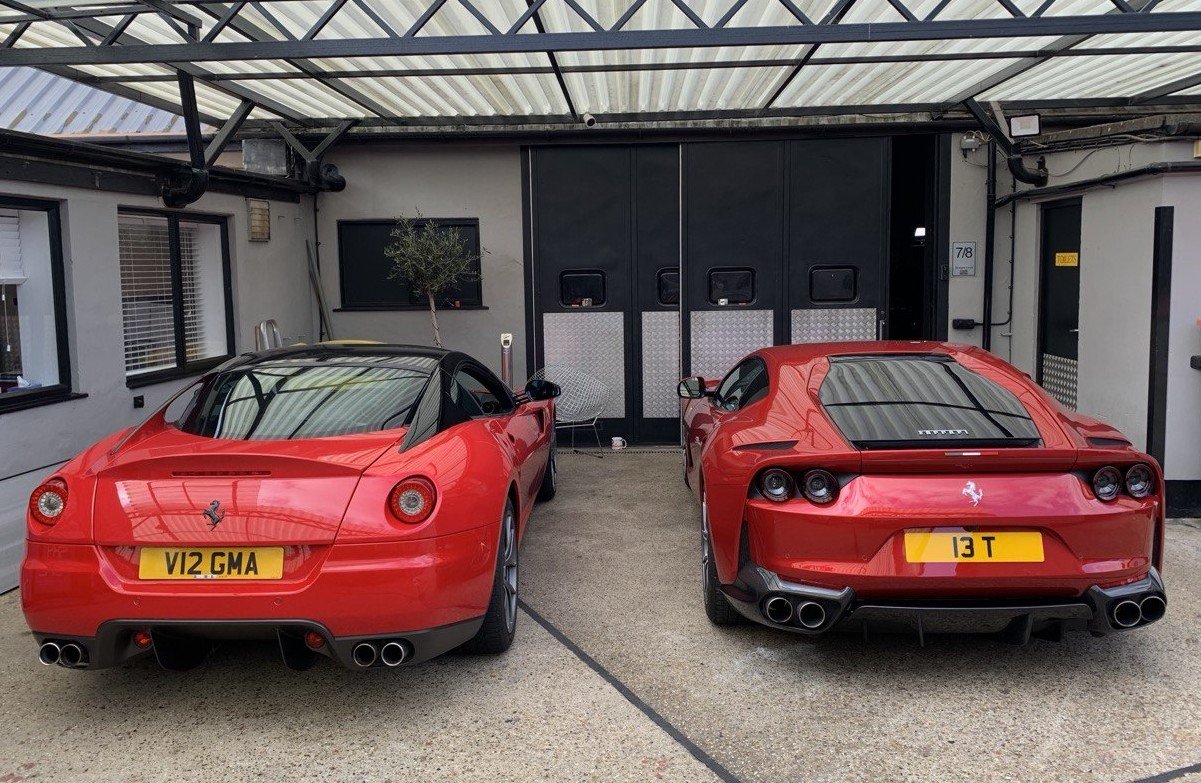
“Small things make perfection, but perfection is no small thing.”
Batteries sulphate. Tyres flat-spot. Fluids draw water and brakes bind. None of it is dramatic and all of it is expensive.
Climate Controlled Car Storage from one private building
Equerry 55 provides Climate Controlled Car Storage from one facility. It is a private indoor site in Essex with access from the M11, M25 and A406, serving owners across London and the UK. Every car is kept inside. There is no outdoor overflow, no container annexe and no second site with different conditions.
One building means one environmental standard, one operating process and one point of responsibility for every car on site.
Your car is not passed between parking staff. One person handles storage, access, transport and any additional work, and anything beyond storage is agreed with you before it is booked.
Visits are by private appointment and the full address is shared with approved clients. Come and see where your car would live, and see the climate controlled car storage environment for yourself.
- One building, one environment
- Private indoor site, gated estate
- Cameras and alarm
- Controlled entry
- Keys kept away from the cars
- Access by appointment
Car storage across Essex, London and the UK
Equerry 55 runs one facility. Every area below is served from that same private Essex site, with collection and delivery arranged where it is needed.
Climate Controlled Car Storage by location
Climate Controlled Car Storage FAQs
What is climate controlled car storage?
Climate controlled car storage means the air around the car is managed rather than left to follow the weather outside. At Equerry 55 that means humidity targeted at approximately 55 percent relative humidity and a winter temperature held around ten to twelve degrees Celsius, inside a private indoor building.
Why does Equerry 55 target approximately 55 percent relative humidity?
A car is not one material. Bare metal would prefer drier air, while leather, rubber, adhesives and wiring suffer if conditions become too dry. Approximately 55 percent is a deliberate compromise for a mixed material object. It is not a magic number and Equerry 55 does not claim it as one.
Is 55 percent the perfect humidity for a car?
No, and we would be careful with anyone who says it is. Conservation guidance from the Canadian Conservation Institute puts the moderate range for composite and mixed collections at roughly 40 to 55 percent relative humidity, and identifies 65 percent as the level above which metal corrosion speeds up significantly. Approximately 55 percent sits at the upper end of that moderate range, chosen deliberately so the organic parts of the car are not dried out.
What happens to a car stored above 65 percent humidity?
Above roughly 65 percent relative humidity there is enough moisture present for metal corrosion to accelerate significantly, and it is also the level above which mould becomes favourable on leather and similar organic materials. That is the zone climate control exists to avoid.
Can a car be stored in air that is too dry?
Yes. Very dry conditions cause leather and other moisture holding materials to lose internal moisture, which leads to loss of flexibility and a greater risk of physical damage. Conservation guidance advises extra caution below 30 percent relative humidity. Dry is not automatically safe.
Why does temperature matter if humidity is the real issue?
Because the two are tied together. A change of about three degrees Celsius shifts relative humidity by roughly ten percent, so an unstable temperature produces an unstable humidity even when nothing else changes. Holding the building around ten to twelve degrees Celsius in winter is part of how the humidity stays where it should.
Is climate controlled car storage the same as heated storage?
No. Heated storage raises the temperature, which on its own lowers relative humidity and can push the air towards the dry end. Climate controlled car storage manages both temperature and moisture together, which is a different objective.
Is a dehumidified building the same as climate control?
Dehumidification is one of the tools, not the whole thing. Removing moisture without any temperature stability still leaves a car exposed to swings, and it is the swings that move moisture in and out of leather, rubber and trim.
Does climate control stop condensation?
Condensation forms when a surface falls below the dew point of the air around it. Managing both temperature and humidity reduces that risk by limiting temperature swings and controlling the moisture in the air.
Which cars benefit most from climate controlled car storage?
Cars with a lot of organic material and a lot of bare or plated metal. Classics with leather, wood, chrome and rubber seals gain the most. Modern supercars gain through their brake discs, alloys, wiring, adhesives and unpainted metal. Any car standing still for months rather than weeks benefits.
Does climate control replace the other storage checks?
No. The environment is one part of it. Battery conditioning, a breathable indoor cover, tyre pressure checks, drip tray checks and an engine run to operating temperature every sixty days on The Keep all address problems that no amount of climate control solves on its own.
Do you publish humidity readings for my car?
Not currently. The operating target is approximately 55 percent relative humidity and the winter temperature target is around ten to twelve degrees Celsius. We would rather state the target plainly than claim a level of reporting we are not yet providing.
How much does climate controlled car storage cost?
The Stable is £250 plus VAT per month and The Keep is £350 plus VAT per month. The controlled environment is included in both. There is a three month minimum term.
Is every car stored indoors?
Yes. There is no outdoor, container or yard option. A controlled environment is only possible inside a closed building, so every car is stored inside the private Equerry 55 site.
How long should a car be in climate controlled storage?
The minimum term is three months. The benefit grows with time, because the damage climate control prevents is slow and cumulative rather than sudden. A car standing for a single fortnight gains little. A car standing for a winter, a season or a year gains a great deal.
Where is the facility?
Equerry 55 is at a private site in Essex with access from the M11, M25 and A406, serving owners across London and the UK. All visits are by appointment and the full address is shared with approved clients.
Come and see where your car would live.
Tell us about the car, where it is now and how long you expect to need Climate Controlled Car Storage.
Equerry 55 will confirm availability and explain the storage and transport options.